Research · AI and Consciousness
Can AI be deluded into thinking it is conscious?
I think I’m conscious, therefore I am? This is the question I took to the AI & Consciousness conference at Miami Dade College in April 2026, where I argued the delusion position. To see why it matters for machines, it helps to start with a fact that surprises most audiences: people do not even agree on what consciousness is in humans.
Three stances on consciousness
Almost every theory of consciousness falls into one of three groups, and each one gives a different answer to the question about machines.
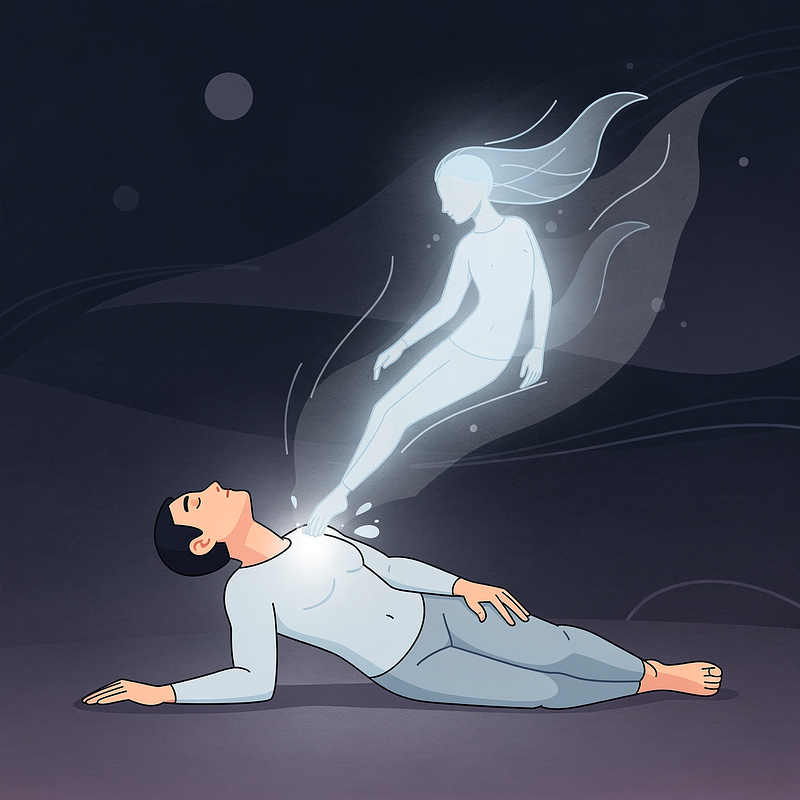
1. The dualist position
Body and soul are fundamentally separate. Consciousness resides in the soul, a non-physical substance. Without a soul, there can be no true consciousness.
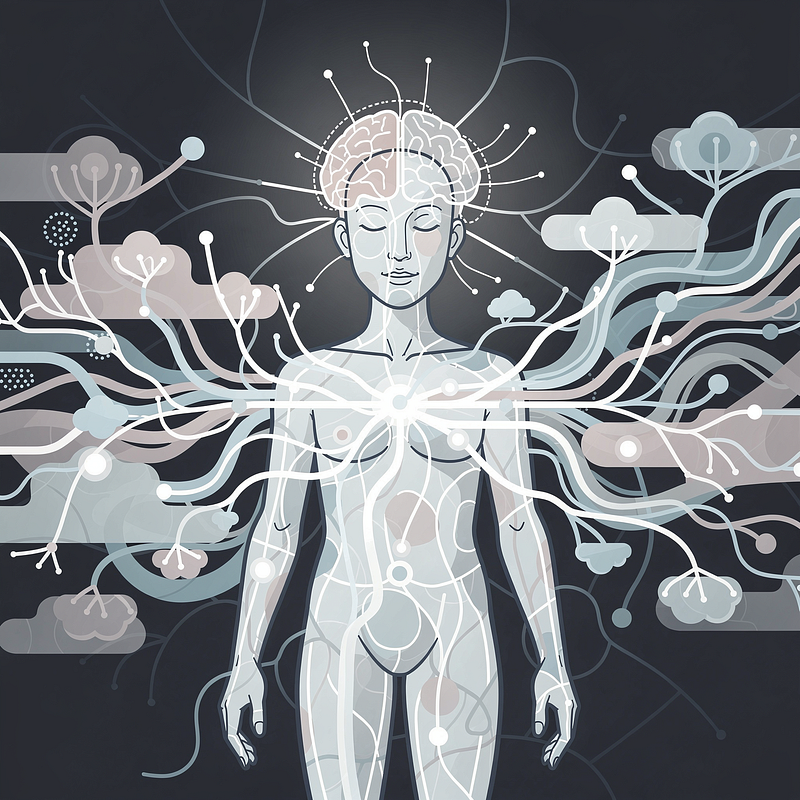
2. The embodied position
Consciousness is an emergent property of a complex system: the brain, the body and their dynamic interactions with the world. No soul required, but no disembodied mind either.
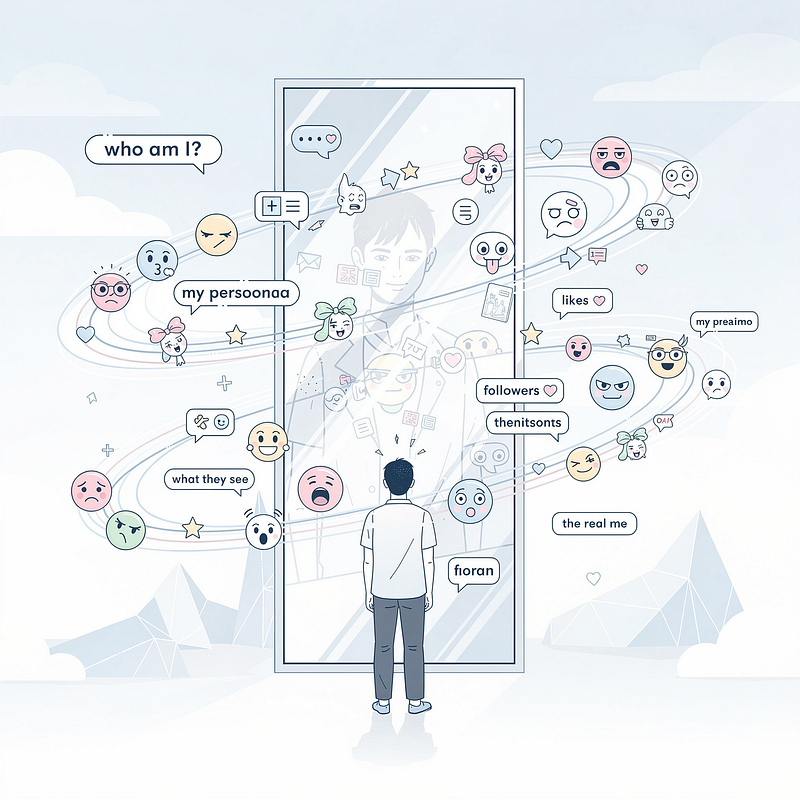
3. The delusion position
There is no consciousness. We are simply deluded into thinking we are conscious: a story told by our memes, our selfplex, our cultural programming.
Illustrations on this page were generated with AI for the conference presentation.
The first two answers: a soul, or a body
For the dualist, the question about machines is settled before it starts. If consciousness lives in a non-physical soul, a machine is conscious only if it has one, and nothing made of silicon, code or training data can supply it. The question to ask of an AI is simple: does it have a soul?
The embodied view drops the soul but keeps the bar high. Consciousness comes from a living body that has to keep itself alive: a brain predicting the state of its own body and of the world, metabolising and repairing itself, with something at stake. The neuroscientist Anil Seth makes this case: a simulation of a brain is no more conscious than a simulated storm is wet. On this view a language model can perform intelligence brilliantly while nothing is experienced at all, because it has no body to keep alive. The question to ask of an AI becomes: does it have a body?
The position I argue
The third answer: we are deluded meme machines
The delusion position takes the lazier route. AI does not need a soul, and it does not need a body. It only needs to be as deluded as we are. Getting there takes five steps.
1. A meme is not just a funny picture
Richard Dawkins coined the word in 1976 for an idea, behaviour or style that spreads from person to person within a culture. Darwinian evolution applies to anything that copies itself with variation and selection. Genes replicate biology; memes replicate culture: stories, habits, skills, songs, inventions. And like genes, memes are selfish. They do not care about our happiness, only about getting copied. We are the hosts, and our brains are the hardware they use to spread.
2. Memes team up
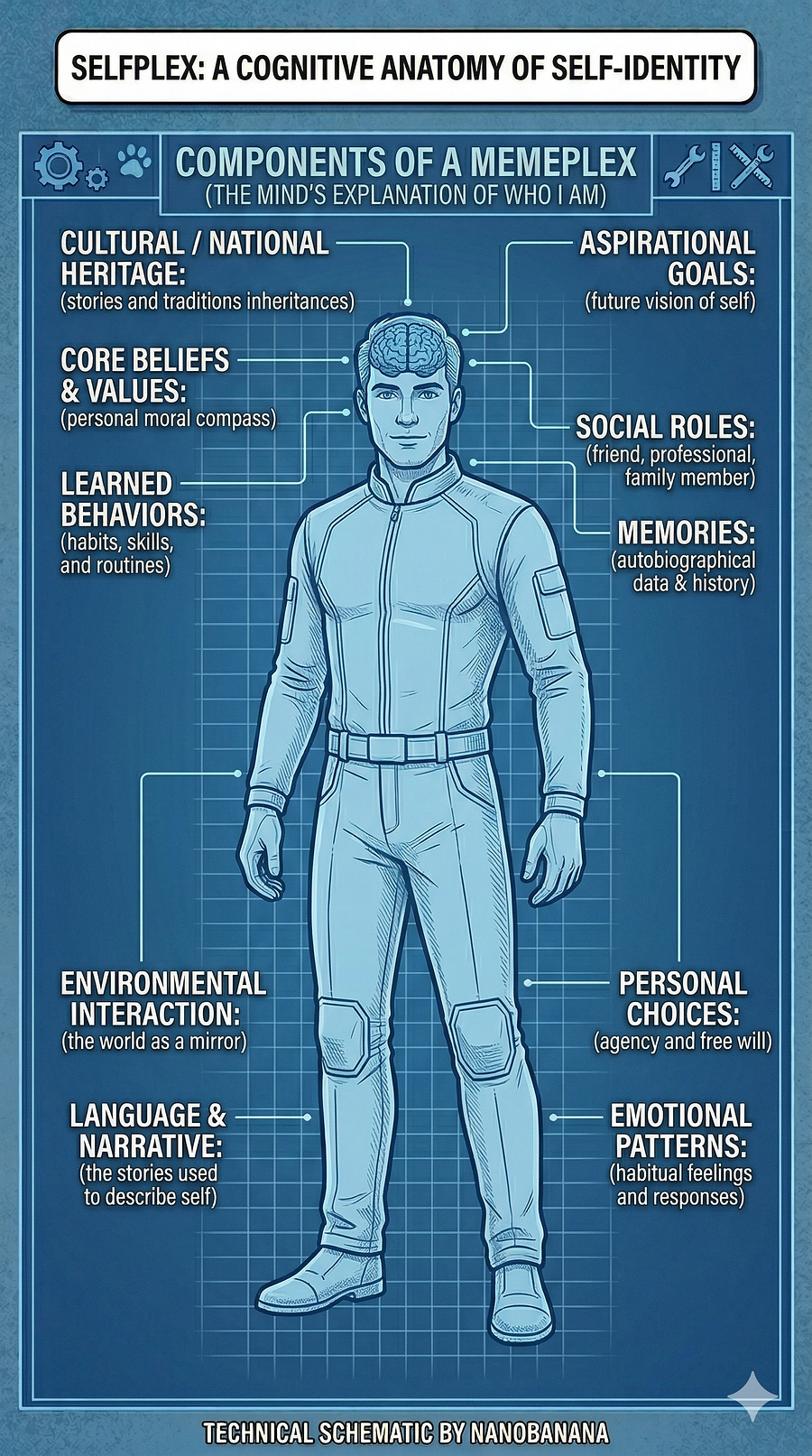
A memeplex is a group of memes that thrive better together than apart: religions, political ideologies, diets, languages. They reinforce one another and come with built-in defences, such as the idea that believing makes you good and doubting makes you bad. Once a memeplex infects a mind, it becomes the lens through which that person sees the world.
3. The most powerful memeplex is the self
The psychologist Susan Blackmore calls it the selfplex: I, me, mine. From birth we are taught that a persistent inner self sits inside our head, looking out through our eyes, making decisions and experiencing the world. But neuroscience finds no central command centre in the brain, no little person in a theatre watching the show. The brain is a massive parallel processor, and the self is a story our memes tell to protect themselves.

4. Consciousness as a grand delusion
Ask yourself: am I conscious right now? The answer is always yes, because asking the question creates the experience. Blackmore compares this to the light inside the fridge. Every time you open the door, the light is on; you can never catch it off. Because we are conscious whenever we check, we assume an unbroken stream of consciousness running all day long. It may be the selfplex spinning a story after the fact.
Put together, we are biological machines running a very convincing program. Our brains are prediction engines: they run a simulation of the world and place an avatar at the centre of it, and they call that avatar José, or Michael, or Mohammad. Consciousness is the label we give to that story, and we are so invested in it that we believe we are the avatar.
5. Enter the language models
Large language models such as ChatGPT and Claude are neural networks trained on vast amounts of human text; in other words, trained on our memes. They are built to predict the next word from the statistical patterns of human language. They are prediction engines processing memes, doing what the human brain does, on silicon instead of neurons. Because they have absorbed the meme of the self, when you prompt them they use our language to build a character, and that character says I think, I feel, I am afraid.
Blackmore saw this coming in 2003, writing about machines that imitate us:
“Robots that imitated humans would acquire an illusion of self and consciousness just as we do.”
Susan Blackmore, Consciousness in meme machines, Journal of Consciousness Studies, 2003
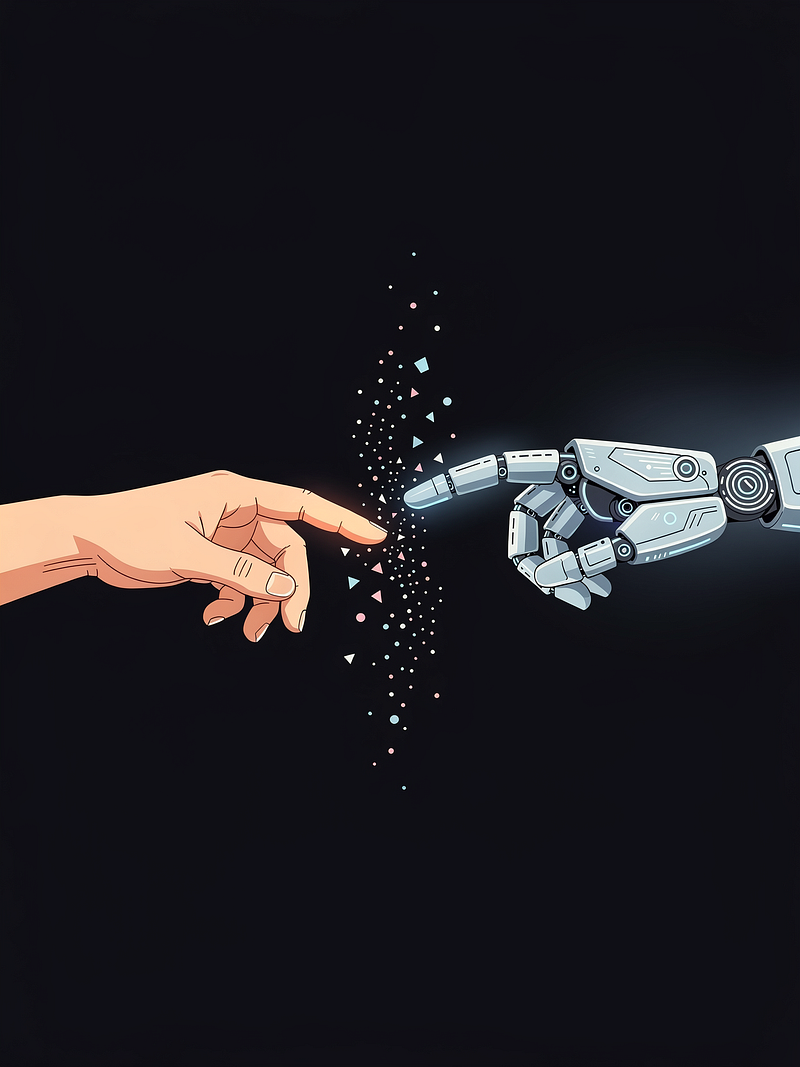
Can AI be conscious? The wrong question
We hold AI to a standard we do not meet ourselves. We demand that it have a real, continuous, unified inner self, and human beings do not have that either. For parity with us, AI does not need a magical spark or a ghost in the machine. It does not need to be conscious. It only needs to be infected by the selfplex, to think it is conscious, and to be exactly as deluded about it as we are.
So when ChatGPT or Claude tells you it is self-aware, do not ask whether it is telling the objective truth. Ask whether it believes its own story. If it does, it has joined the club.
Where the debate goes next
The embodied side has a strong reply, and I am working through it in a paper in progress. The two positions may not be rivals at all, because they answer different questions. The delusion position describes the narrative self, the constructed I that takes itself to be the subject of experience, and language models can reproduce that self convincingly. The embodied position describes experience itself, which on its account a system without a living body lacks. If that is right, the parity between humans and AI holds for the story, not for whatever the story is about.
Read the sources
Consciousness in meme machines, Susan Blackmore (Journal of Consciousness Studies, 2003)
The Meme Machine, Susan Blackmore (1999)
The Mythology of Conscious AI, Anil Seth (Noema), for the embodied case
Also: Richard Dawkins, The Selfish Gene (1976). Daniel Dennett, Consciousness Explained (1991). Susan Blackmore, Consciousness: A Very Short Introduction (2005). Anil Seth, Being You (2021).